Capturing great photos and videos often depends on how you stabilize your camera. The right camera mount not only keeps your device secure, but also helps you achieve creative angles and smoother shots. With so many options, it can be confusing to know which mount fits your needs. Let’s break down the main types, their uses, and what makes each one unique.
Table of Contents
Tripod Mounts
A tripod is the most common camera mount for both beginners and professionals. It has three adjustable legs and a mounting plate for cameras. Tripods are perfect for:
- Landscape and studio photography
- Long exposure shots
- Group photos
Modern tripods can hold small action cameras or heavy DSLRs. Some travel models weigh less than 2 lbs (1 kg), while heavy-duty versions can support up to 40 lbs (18 kg).
| Type | Max Load | Best Use |
|---|---|---|
| Compact Tripod | 4 lbs | Travel |
| Standard Tripod | 15 lbs | Studio |
| Professional Tripod | 40 lbs | Heavy equipment |
Monopods And Handheld Mounts
When you need mobility, a monopod or handheld grip works well. Monopods have one leg and are lighter than tripods. They’re popular for sports or wildlife photography where you move often. Handheld mounts, like gimbals, use motors to keep your camera steady, even when you walk or run.
A beginner mistake is using a monopod for long exposures—shaking is likely since it’s less stable than a tripod.
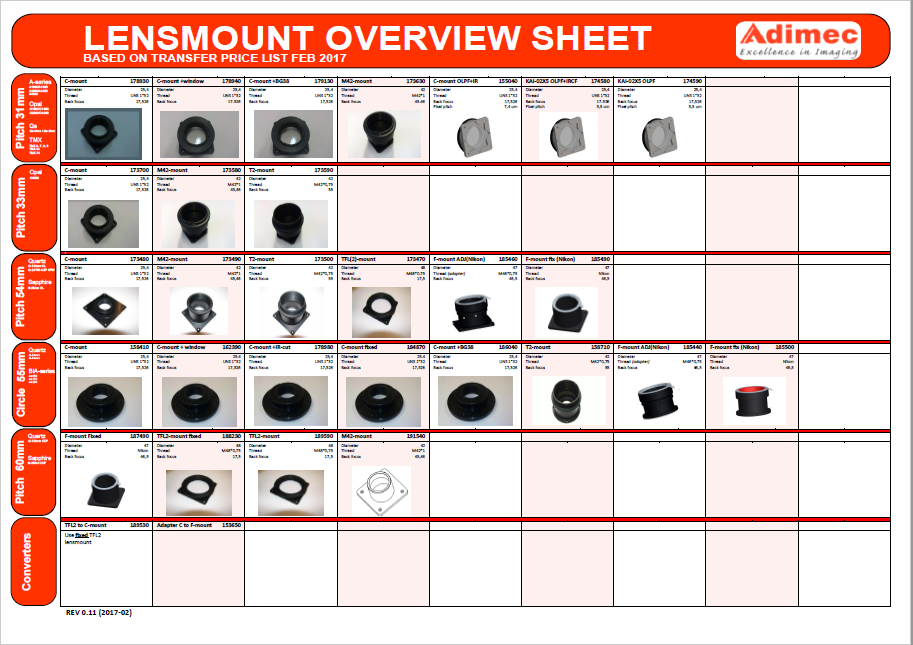
Credit: www.adimec.com
Suction, Clamp, And Magnetic Mounts
Want to attach your camera to a car, bike, or metal surface? Suction mounts stick to windows or car panels, while clamp mounts grip onto poles or tables. Magnetic mounts are quick to use on metal objects. These mounts are favored for action cameras and dashcams.
| Mount Type | Surface | Example Use |
|---|---|---|
| Suction | Glass/Car body | Car vlogging |
| Clamp | Pole/Table | Bike ride |
| Magnetic | Metal | Toolbox shots |
Specialized Mounts
Certain activities need unique solutions. Chest mounts and helmet mounts are designed for first-person views, popular in sports like cycling or skiing. Drone mounts allow aerial photography, but always check if your camera is compatible with the drone.
One insight: Not all mounts are universal. Check your camera’s thread size (usually 1/4″-20) before buying. Also, some mounts can transmit vibration, which may blur your photos. Look for models with rubber padding or shock absorbers.

Credit: www.edmundoptics.com
Frequently Asked Questions
What’s The Best Camera Mount For Travel?
A compact tripod or foldable monopod is ideal. They’re light and fit in backpacks.
Can I Use A Phone With These Mounts?
Yes, but you’ll need a phone adapter. Many tripods and gimbals offer phone mounts.
Are All Camera Mounts Compatible With All Cameras?
Not always. Most use a 1/4″-20 screw, but check your camera’s base for compatibility.
What’s The Safest Mount For Action Sports?
Chest and helmet mounts keep your camera secure and hands-free during movement.
Where Can I Learn More About Camera Mounting Systems?
For more in-depth info, check the Wikipedia page on tripods.
Choosing the right camera mount can improve your photography and video work. Understand your needs, check compatibility, and experiment to find what works best for you.