There’s no single best camera backpack for hiking. There’s a best one for a certain kind of hiker, with a certain kind of camera and a certain way of working on the trail. Most buyers in this category decide on three things: how fast they need to reach the camera, how much gear they carry, and whether they hike with anything else on their back. We looked at what these listings actually differ on, and that’s where the real comparison lives.
Two products split most buyers. The Lowepro PhotoSport BP 24L suits people who want a full-featured pack that can carry more.
Table of Contents
Pick By Your Situation
Start with the gear you already carry. If you shoot with a mirrorless body and one or two lenses, a smaller bag with padded dividers you can reconfigure will serve you better than a large pack you never fill. If you carry a full kit, count the bodies, lenses, and any drone before you shop, because the listed capacity only tells you so much.
Your activity matters as much as your gear. For birding or wildlife work, look for a bag that lets you reach the camera without taking the pack off, such as a side or back-panel opening, since you’ll be stopping and starting often. Where a camera hangs off the shoulder strap, it stays ready for the shot, but it also means the camera takes weight and bumps on the move.
Your main carry style is the deciding factor. Long days on foot call for a hip belt and a shoulder harness that you can adjust, so the load sits where you can manage it. Air travel calls for a size that meets airline limits and that can sit under a seat. Walking through crowds calls for a bag with a secure closure and zippers you can keep an eye on.
Finally, think about weather and terrain. If you regularly shoot in rain, dust, or on wet ground, a built-in rain cover or a sturdy base will matter more than extra pockets. If you’re mostly in dry city streets, you can give those features less weight.
1. Cotton Carrier Hyker 25L Camera Backpack

Best for: A birder who wants the camera ready on the strap all morning.
Birding and wildlife work mean long waits and quick shots. The Hyker’s Twist & Lock receiver holds a mirrorless or compact DSLR outside the bag, in the shoulder strap, so you don’t dig through the pack each time a bird lands. The camera attaches with a quick-release safety tether, which the listing includes with the anodized aluminum camera hardware.
Binoculars on one side and a camera on the other is the combination the product is built around, so it’s the setup to test before you commit.
Sudden weather is the situation where the rain cover earns its place, since you can pull it out without unpacking anything. The 25-liter main compartment fits layers, snacks and a raincoat. The adjustable shelf divider lets you split that space so the snacks don’t sit on top of your layers.
A water bladder pocket is there, with a mouthpiece pass-through for the hose.
Good if:
- You shoot birds or wildlife from a trailhead or blind.
- You want the camera out while your hands stay free.
- You already use a Cotton Carrier harness or binocular bracket.
Skip it if:
- You need a lot of room for a full kit inside the bag.
- You want a bladder included in the box.
2. Lowepro PhotoSport BP 24L AW III

Best for: A hiker who wants one pack that handles camera gear and a full day outdoors.
The PhotoSport is built around adventure photography, which means the whole design assumes you’re carrying camera gear and outdoor kit on the same trip. The top-loading compartment has room for outdoor essentials, so your layers, food and water can sit alongside the camera without crowding it out.
Attachment points for a tripod and hiking poles are the detail that matters most on a long walk. Instead of strapping a tripod to the outside with bungees and hoping it stays put, you can mount it to the pack itself and keep your hands free on the trail.
The listing describes a top-loading compartment, with attachment points for a tripod and hiking poles. Test it before you commit: if you plan to shoot quickly on the move, try opening the side panel with the pack on your back to see whether it works for your routine.
Because the listing focuses on carrying gear and outdoor use, it suits someone who brings a lot with them. If you only need a few lenses and a light layer, a simpler pack may fit you better, since you would be paying for capacity and attachment points you won’t use.
Good if:
- You carry a tripod and poles on the same trip.
- You want one bag for camera gear and everyday outdoor kit.
- You need top-loading room for layers and food.
Skip it if:
- You want the camera ready outside the bag at all times.
3. Think Tank Backlight Sprint Lightweight Slim Camera Daypack Backpack
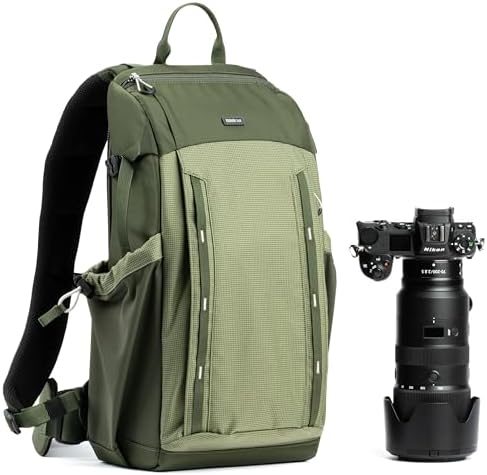
Best for: A minimalist photographer who hikes light and doesn’t want a bulky pack.
The Backlight Sprint is slim, and at 2 lbs. 5 oz it’s one of the lighter packs in this group. The front pocket holds 2 liters of personal gear and opens from the side without removing the pack.
A slim pack carries less, and the listing’s 15-liter volume makes that clear. If you need room for a second body and several lenses, this pack will feel tight.
The back-panel access matters most when you stop to shoot. Instead of setting the pack down in dirt or snow, you can reach in while it stays on your back, then close it and keep moving. That’s the situation the design is built for, so if you rarely stop mid-hike, this feature is worth less to you.
The front pocket is useful for the small items you need quickly, such as a phone, snacks, or a headlamp. Because it opens vertically on the right, you can grab something without shrugging the pack off. Keep bulkier personal gear in the main compartment, since the pocket’s 2 liters is limited.
The simplified tripod carry uses the front pocket and the upper compression straps, and it works on either side of the pack. This helps when you want to keep the tripod accessible on a short walk. On a longer, steeper hike, a tripod strapped outside the pack can shift and pull on your shoulders, so check how it sits before you commit to a long route.
Good if:
- If you carry a single body and a pair of lenses, a slim pack will do.
- You want a light pack for long days on the trail.
- You like reaching gear from the back of the pack.
Skip it if:
- You need space for a full kit and a tripod on one trip.
4. TARION Professional Camera Backpack

Best for: A photographer with a heavier kit who wants fast side access and a firm shape.
The ARK PBL-V2 adds a fiber-rod frame that holds the side opening in shape, so you can pull out a body with a telephoto lens without fighting a collapsing bag. The fiber rods keep the opening at a clean 7-inch rectangle even when the upper compartment is packed full. That matters most when you’re reaching in quickly during a wedding, a street shoot, or a client set, because a sagging opening forces you to squeeze the gear out and scrape the zipper.
The listing says the frame keeps the pack standing whether it’s empty or full, which helps when you set it down on wet ground. Soft foam tends to cave in under a full load, and the high-density rebound padding plus fiber support at the stress points is meant to prevent that. A pack that stays upright also keeps your camera body and lens from being crushed against the side when you put it down.
The 20.5-liter capacity steps up from the smaller PBL-V1. The V1 at 15 liters is the better fit for lighter daily travel, while the V2 suits longer shoots and heavier kits. If your gear fits comfortably in the smaller bag, the extra room will mostly just tempt you to carry more.
The base is covered in anti-slip PU leather, which the listing says helps against gravel, concrete, and wet ground better than small rubber feet. Nine removable dividers let you set the main compartment for your own gear, whether that’s two bodies, several lenses, drone batteries, or cables. Map the dividers to the gear you own before you buy, because a pack that fits your setup on day one is easier to live with than one you have to reconfigure every time.
The frame and extra padding add weight, so this pack suits someone who is used to carrying a heavier load. If you’re not, the added bulk will be noticeable on a long day.
Good if:
- You carry a DSLR or mirrorless body with a telephoto lens.
- You want the bag to hold its shape on uneven ground.
- You want to customize the inside with dividers.
Skip it if:
- You want the lightest pack possible for a fast hike.
5. RAINSMORE Tactical Camera Backpack

Best for: A photographer who wants a rugged pack with strong protection for gear in harsh weather.
This pack is built from 900D Oxford fabric, which the listing says resists scratches, tears and weather. The interior has thick padding, six dividers and elastic straps to keep gear from shifting. A rain cover comes in the box, and the side opening is meant for quick access to the camera.
The dividers matter most when you carry more than one body. The listing says you can set the main compartment for one or two DSLR, SLR or mirrorless bodies with three to five lenses, or split the space to hold a camera kit and a drone with its accessories. Set the dividers before you pack, not after, so each lens has its own slot and nothing knocks against a neighbor.
The side opening is meant for quick grabs. Inside the side flap, the listing mentions dedicated SD card slots and an anti-slip battery pouch with a secure cover, so spare cards and batteries stay in one place instead of loose in the bottom of the pack.
The MOLLE webbing and patch panel let you attach extra pouches. The listing also covers tripod carry, a hidden back pocket and a memory foam shoulder strap. Full-size tripods ride on the bottom straps, while compact ones fit the side pocket, which keeps your hands free on the walk.
On a long hike the pack will feel heavier than the lighter options in this list, so the protection adds weight. Packed with a full kit, the padding and dividers add bulk, so the pack is better suited to shoots where you carry gear for a day than to ultralight trips.
Good if:
- You shoot in rain, dust or rough terrain.
- You want room to attach extra pouches.
Skip it if:
- You want the lightest load for fast, long-distance hiking.
6. Maelstrom 40L Hiking Backpack

Best for: A hiker who needs a big pack for camping or multi-day trips and uses a camera only now and then.
This is a general-purpose hiking pack, not a camera bag. Its 40-liter capacity is large, and the listing names camping, hiking, travel and fishing as uses. That range matters: a pack built for a weekend of tents, food and water has to carry bulk well, and this one is meant to do that.
It has a water-bladder system, reflective markings and a headphone hole, and the rain cover is tucked in the base. The rain cover is useful when you’re walking all day in changing weather, since it keeps the whole pack dry without a separate purchase.
The listing doesn’t mention a padded camera insert or dividers. That means camera gear would have to be wrapped in clothing or a soft case and packed by hand, and the lenses and body would sit against your other gear rather than in protected compartments. If you plan to carry a dedicated camera body with several lenses on rough trails, that’s the main gap to plan around.
A simple test helps. If the camera is a secondary item, one of many things you carry, this pack handles it well enough. If the camera is the reason you’re going out, the lack of built-in protection will matter more than the extra space.
Good if:
- You camp or hike several days at a time.
- You carry a camera as one item among many.
- You need a large main compartment and a bladder system.
Skip it if:
- You want padded protection for a camera body and lenses.
7. CADeN Camera Backpack Bag Professional

Best for: A photographer who wants a very light camera pack for day hikes.
It holds two cameras and four lenses, with a 10 mm thick frame and 18 mm dividers. Those dividers are made of multiple layers, and the stiff frame is there to protect the camera itself, so the pack is built for gear protection rather than just carrying. For a day hike, that matters: you can keep the weight down without relying on thin padding to keep your bodies and lenses safe.
The listing also mentions a tripod holder with a strap, a high-elasticity mesh pocket for bottles or umbrellas, and a front zipper pocket sized for a 10-inch tablet and small accessories. A 14-inch laptop compartment is included too. Those pockets are useful if you want to carry water or a light layer alongside your camera without opening the main compartment every time you need a drink.
The listing describes the material as water resistant, and it does not claim full waterproofing. If you expect a soaking, pack your gear in a dry bag or rain cover inside the pack. The shoulder straps are thickened, lengthened and highly elastic, and the handle is reinforced. For a lightweight pack with real camera protection, it’s a strong option.
Good if:
- If you carry two camera bodies and a few lenses, the layout of the dividers will decide how well the pack works for you.
- You hike in light weather.
Skip it if:
- You need full waterproofing in heavy rain.
Where These Overlap
The Cotton Carrier Hyker 25L and the Lowepro PhotoSport BP 24L are close in size, and both are built for outdoor photography. The real difference is how you reach the camera. The Hyker holds the camera outside the bag, while the PhotoSport relies on side and top access. If you shoot birds or wildlife, the Hyker’s strap receiver is the deciding feature. If you carry a full kit, the PhotoSport’s room is the deciding feature.
The Sprint is slimmer and has back-panel access, while the CADeN has more capacity for a camera kit that needs room to spare. Your gear list decides between them.
The TARION ARK PBL-V2 and the RAINSMORE are the two most structured packs here. Both have padding and dividers, but the ARK’s fiber frame suits quick side access, while the RAINSMORE’s fabric and rain cover suit harsh weather. The listings don’t separate them on features alone, so the decision comes down to how you plan to use the pack.
The Maelstrom 40L is in a different class. It’s a hiking pack first, with a camera as a side use, so it doesn’t overlap with the camera-focused packs.
Still Not Sure?
How often will I really use it?
If you hike with your camera most weekends, a pack with a dedicated camera layout is worth the space. The padded dividers and side access on the TARION ARK PBL-V2 or the RAINSMORE help when you reach for the camera again and again. If you only carry a camera on a few trips a year, a lighter pack like the CADeN keeps the weight down on the days you don’t need it. Think about how often the camera comes out before you decide how much structure you need.
What do I already own that this has to work with?
Check what you already use. The Cotton Carrier Hyker 25L works with Cotton Carrier harnesses and the binocular bracket, so it makes sense if you already own those. A pack that fits your tripod, poles or water system matters as much as the camera insert. If your gear is mostly a single body and a pair of lenses, the Think Tank Backlight Sprint or CADeN will be enough. Bigger kits need the room of the Lowepro PhotoSport BP 24L.
What am I most likely to regret choosing?
The Think Tank Backlight Sprint is slim, so a larger kit will feel cramped. The TARION ARK PBL-V2 is firm and useful, but it adds weight you may not want on a fast hike. Pick the pack that matches your real trips, not your ideal ones.
Closing
The right pack depends on how you shoot. If you need the camera ready on a strap while you walk, the Cotton Carrier Hyker 25L is built for that. Its Twist & Lock receiver sits in the shoulder strap, so the camera is outside the bag and ready for the shot without digging through your pack. That matters most on trails where you stop often, because you can get the camera up and back down with one hand.
If you want the lightest load, the CADeN or the Think Tank Backlight Sprint will serve you better. The CADeN weighs 1.74 lb (0.79 kg) and holds 2 cameras and 4 lenses. The Backlight Sprint weighs 2 lbs. 5 oz (1 kg) and holds 15 liters, which suits a minimalist kit. Both give up capacity to save weight, so they only work if your gear fits inside them.
Before you buy, count what you actually carry: camera bodies, lenses, a tripod, a laptop, and any drone or binoculars. Then check each pack’s listed capacity and compartment layout against that list. Think about the hikes you take most, too. Long days with a lot of gear call for more padding and a stronger carry system, while short outings reward a slim pack you barely notice.
Pick the pack that fits your gear list and your usual hike, not the one with the most features.
Frequently Asked Questions
Can a camera backpack for hiking hold a full kit with a tripod?
Some packs in this list can. The Lowepro PhotoSport BP 24L has attachment points for a tripod and hiking poles, and the RAINSMORE has dual tripod carry options, with bottom straps for full-size tripods and a side pocket for compact ones. The Think Tank Backlight Sprint has tripod carry on either side, but its 15-liter volume is small for a full kit. Check the pack’s listed volume against your gear before buying. A bigger kit needs more room, and the listing numbers are the best guide.
Do these packs protect the camera from rain?
Most of the packs here include a rain cover in the box, including the Cotton Carrier Hyker 25L, the RAINSMORE and the Maelstrom 40L. The CADeN is described as water resistant, not fully waterproof, so it suits light rain. A rain cover helps in a storm, but the fabric’s water resistance also matters on wet days. If you hike in heavy rain often, look for a pack with a rain cover and a fabric the listing calls waterproof.
Is a camera backpack good for everyday hiking without a camera?
A camera pack built for gear isn’t always the best choice for general hiking. The Maelstrom 40L is built as a hiking pack, with a 40-liter main compartment, a water-bladder system and reflective markings, so it fits everyday hiking better. The camera-focused packs have padded inserts that take up room a hiker might want for food and layers. If the camera comes out only sometimes, a general pack may serve you better.
How do I choose between a slim pack and a larger one?
Start with the gear you carry most often. A slim pack like the Think Tank Backlight Sprint suits a single camera and a pair of lenses, and it keeps the weight low. A larger pack like the TARION ARK PBL-V2 or the Lowepro PhotoSport BP 24L suits a bigger kit and a tripod. Measure your camera, lenses and any extras, then compare them against the listed interior dimensions and volume.