The Nikon NIKKOR Z 50mm f/1.8 S is a fast prime lens for Nikon’s Z-series mirrorless cameras, built to give Z owners a classic 50mm view with a wide f/1.8 aperture for sharp portraits, low-light scenes and softly blurred backgrounds. Nikon’s listing promises “uncanny f/1.8 performance” with extreme sharpness and virtually zero distortion, an ultra-quiet stepping motor for silent focusing, and 5-Axis Dual Detect optical VR through compatible Z camera bodies.
The buyer this lens is built around is a Z camera owner who shoots often and wants one lens they can keep on the body. Think of someone who photographs family indoors, walks around town with a camera, or shoots portraits in the evening. It sits alongside a kit zoom rather than replacing it — the zoom covers range, this one covers quality and light. The trade-off you will weigh is simple: a prime lens cannot zoom, so you move your feet instead of turning a ring, and you will still want a zoom for distant subjects. Whether that trade suits you decides everything else below.
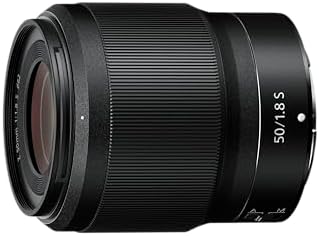
Table of Contents
Is this 50mm prime right for you?
This lens suits the Nikon Z owner who has outgrown the kit zoom. If you shoot portraits of family or friends a few times a week, the 50mm field of view on a full-frame Z body is close to what your eye sees, and the f/1.8 aperture gives you that blurred-background portrait look. Nikon describes its bokeh as “beautiful,” and a portrait shooter who already owns a zoom would add this lens specifically for that. You need to be comfortable framing by moving closer or stepping back, because there is no zoom ring here.
It also suits the low-light shooter. If you photograph indoors, at restaurants, or after sunset, the wide aperture lets in far more light than a typical zoom does at its longest setting. Nikon claims “superior low-light performance,” and the 5-Axis Dual Detect optical VR — which runs through compatible Z camera bodies — adds shake correction on top. A street photographer who walks in the evening, or a parent shooting a school play from a seat, fits this lens well.
Who should skip it? The wildlife or sports shooter. A 50mm prime cannot reach a distant subject, and no amount of sharpness fixes that. If your main subjects are far away, you want a telephoto instead. Also be aware of one compatibility point from the listing: this is a Z-mount lens for Z mirrorless cameras, and while Nikon says it is also compatible with F-mount NIKKOR lenses through the FTZ Mount Adapter, that adapter is sold separately — meaning the adapter is not in the box. An F-mount film or DSLR owner without a Z body should look at F-mount glass instead.
What you get from this lens
Nikon built this lens around three things a Z owner actually feels in daily use: sharp images wide open, quiet focusing, and better handheld shots in dim light. Here is how those break down.
Sharp portraits and blurred backgrounds
The headline claim is image quality at f/1.8. Nikon’s listing promises “uncanny f/1.8 performance, extreme sharpness and virtually zero distortion.” What that means for you is that you can shoot at the maximum aperture — the whole reason you buy a fast prime — without stopping down to rescue the image. Many photographers buy a lens like this and then avoid its widest setting because it goes soft; Nikon’s wording is aimed directly at that worry.
The 50mm focal length itself does part of the work. On a full-frame Z body it gives a natural, undramatic view that flatters faces, and combined with the f/1.8 aperture it separates your subject from the background. Nikon calls this “beautiful bokeh,” and for portrait work that background blur is the look people ask for. For a product photographer shooting small items, or a parent who wants the child sharp and the room soft, this is the setting you would leave the dial on.
A condition worth noting: distortion is described as “virtually” zero, not zero, and the claims are the manufacturer’s own. But the practical point stands — Nikon is stating that you will not spend your editing time straightening lines or correcting the image.
Silent focusing for video and quiet moments
The second job is focusing you cannot hear. The listing describes a “new ultra-quiet stepping motor for silent focusing.” For a photographer this matters less; for anyone shooting video on a Z camera, or photographing a sleeping baby, a wedding ceremony or a quiet event, it matters a lot. A noisy focus motor forces you to mute your clips or wait for the moment to pass.
A stepping motor also changes how focus behaves. Nikon’s wording points to smooth, quiet movement rather than loud mechanical shifts, which is what you want when focus pulls back and forth during a clip. If you film talking-head videos, family clips or events, silent focusing is the listed feature doing the work here.
The limit here is that the claims describe the motor itself, not specific focusing speeds. Nikon does not state in the listing how fast the lens locks focus, so if you shoot fast action you are trusting the 50mm prime design rather than a stated figure.
Steadier handheld shots through your camera body
The third job is shooting without a tripod. The listing says the lens supports “5-Axis Dual detect optical VR powered by Z cameras.” Read that carefully, because it is a shared job: the vibration reduction runs through compatible Z camera bodies, not through parts inside the lens. Your Z body’s in-body stabilisation and the lens’s focus information work together to correct shake on five axes.
For you, that means handheld shots in dim rooms, evening streets and indoor events become more usable. Low light is exactly where camera shake ruins photos, and Nikon pairs this VR claim directly with its “superior low-light performance” line. If you already own a newer Z body with strong in-body stabilisation, this lens is designed to take advantage of it rather than duplicate it.
Check your camera model against Nikon’s compatibility information before buying if stabilisation is your main reason for choosing this lens — the listing does not spell out which bodies qualify.
Built to travel light on your camera
The last job is comfort. Nikon describes a “compact, lightweight and slim unibody (monocoque) body design.” A monocoque construction means the body is built as a single unified structure, which Nikon presents as a way to keep the lens slim without giving up rigidity. For you, that is a lens you can leave mounted on a Z body all day — walking a city, carrying a bag at a wedding, or holding a camera at eye level for an afternoon — without the front-heavy pull of a larger lens.
This pairs naturally with the way Nikon describes Z cameras in the same listing, including the tilting Vari-angle LCD display. A light prime plus a tilting screen is a setup built for shooting from low angles or over crowds without straining. For travel, the whole point of a 50mm f/1.8 prime is that it earns its place in a small bag next to a zoom rather than demanding a bag of its own.
| # | What Amazon lists |
|---|---|
| 1 | Fast 50mm prime for Z Mirrorless cameras |
| 2 | Uncanny f/1.8 performance, extreme sharpness and virtually zero distortion |
| 3 | New ultra-quiet stepping motor for silent focusing |
| 4 | Beautiful bokeh and superior Low-light performance |
| 5 | 5-Axis Dual detect optical VR powered by Z cameras |
| 6 | Compact, lightweight and slim unibody (monocoque) body design with tilting Vari angle LCD display |
| 7 | Also compatible with F Mount NIKKOR Lenses using the FTZ Mount Adapter (sold separately) |
Pros and cons at a glance
Pros
- Extreme sharpness claimed even at f/1.8
- Virtually zero distortion, per Nikon
- Ultra-quiet stepping motor for silent focusing
- Stabilisation handled jointly by the lens and compatible Z camera bodies
- Compact, lightweight monocoque body design
Cons
- Prime lens: no zoom, you move instead
- FTZ adapter sold separately, not included
- VR depends on the camera body, not the lens
Should you buy this Nikon lens?
Buy the NIKKOR Z 50mm f/1.8 S if you own a Nikon Z mirrorless camera and your photography lives at normal distances — people, streets, dinners, portraits. Nikon’s own claims cover exactly those situations: sharpness wide open, low-light ability, silent focusing and stabilisation shared with the body.
For the portrait shooter, the answer is yes with confidence. The f/1.8 aperture and Nikon’s “beautiful bokeh” claim are aimed at your work, and the compact monocoque body means you can carry it all day. You already own a zoom for reach; this lens adds the look a zoom cannot give you.
For the low-light and video shooter, the answer is yes, with a check. The ultra-quiet stepping motor and the stabilisation both serve handheld evening and indoor work, but the stabilisation runs through compatible Z camera bodies. Confirm your body supports it before you buy. If it does, this lens and your camera are designed to work as one system.
If your subjects are mostly distant — wildlife, sport, kids on a far field — skip it. No prime at 50mm reaches a far subject, and you would be better served by a telephoto zoom for Z mount. That is the central trade in one sentence: you are buying the best possible image at one focal length, and giving up every other focal length to get it. If you can live with that, this lens earns its place.
Frequently Asked Questions
Does this lens work with my Nikon DSLR?
Not directly. This is a Z-mount lens built for Nikon’s Z mirrorless cameras, so it does not mount on an F-mount DSLR body by itself. The listing’s FTZ Mount Adapter compatibility covers using older F-mount lenses on Z bodies — the reverse direction. If you shoot a DSLR, check Nikon’s F-mount 50mm options instead.
What is included in the box?
The listing names the lens itself and states the USA model in black. It does not itemise accessories such as a hood, caps, case or warranty card, and it makes clear only that the FTZ Mount Adapter is sold separately. Check package contents with the seller before ordering.
Do I need to maintain or service this lens?
No upkeep beyond normal lens care: keep the front element clean, store it dry, and use caps when it is off the camera. A prime lens has no zoom mechanism to wear, removing a moving assembly. The listing does not state a warranty length, so confirm terms with Nikon or the seller.
Is a 50mm prime still worth owning if I have a zoom?
Yes, and the reason is light and image quality, not range. A fast prime concentrates its whole design on one focal length, delivering the extreme sharpness at f/1.8, virtually zero distortion and beautiful bokeh Nikon claims. If you shoot people and everyday scenes at similar distances, it earns its bag space next to your zoom.
Will the stabilisation work on every Z camera?
The listing ties the stabilisation to the camera: “5-Axis Dual detect optical VR powered by Z cameras.” The vibration reduction runs through compatible Z bodies working with the lens, not through parts inside the lens alone. Nikon does not list which Z models qualify, so verify your body against Nikon’s compatibility information before ordering.