A CPL lens filter (Circular Polarizer) is a favorite tool for many photographers. But when is the best time to use one? If you want to take your photography to the next level, understanding how and when to use a CPL filter is important. This guide breaks it down simply, so you know when to reach for this filter—and when to leave it in your bag.
Table of Contents
What Does A Cpl Filter Do?
A CPL filter cuts reflections and glare from surfaces like water, glass, and shiny leaves. It also makes blue skies richer and improves overall color. By turning the filter, you can control how much effect you get. CPL filters are popular for both landscape and city photography.
When Should You Use A Cpl Filter?
1. Outdoor Landscapes
A CPL filter is perfect for landscape photos. It makes clouds stand out against the sky and makes colors more vivid. For example, after rain, wet leaves reflect a lot of light. A CPL filter removes this shine, so you see the true green color.
2. Water Scenes
If you want to photograph lakes or streams, a CPL filter helps a lot. It can reduce glare on the water, letting you see rocks or plants below the surface. This is great for both wide shots and close-ups.
3. Shooting Through Glass
Taking pictures through windows or car windshields can be tricky. Reflections often ruin the shot. A CPL filter can remove most of these reflections, making your photo much clearer.
4. Urban Photography
In cities, there are many shiny surfaces—cars, buildings, windows. A CPL filter cuts unwanted glare and makes colors pop, especially in bright daylight.
5. High Contrast Scenes
When the sun is bright, colors can look washed out. A CPL filter balances the light, improving contrast and making details sharper.
Here’s a quick comparison of when to use (or skip) a CPL filter:
| Situation | Use CPL Filter? | Reason |
|---|---|---|
| Sunny landscape | Yes | Enhances sky and colors |
| Rainy day indoors | No | Little glare to remove |
| Window reflections | Yes | Reduces reflections |
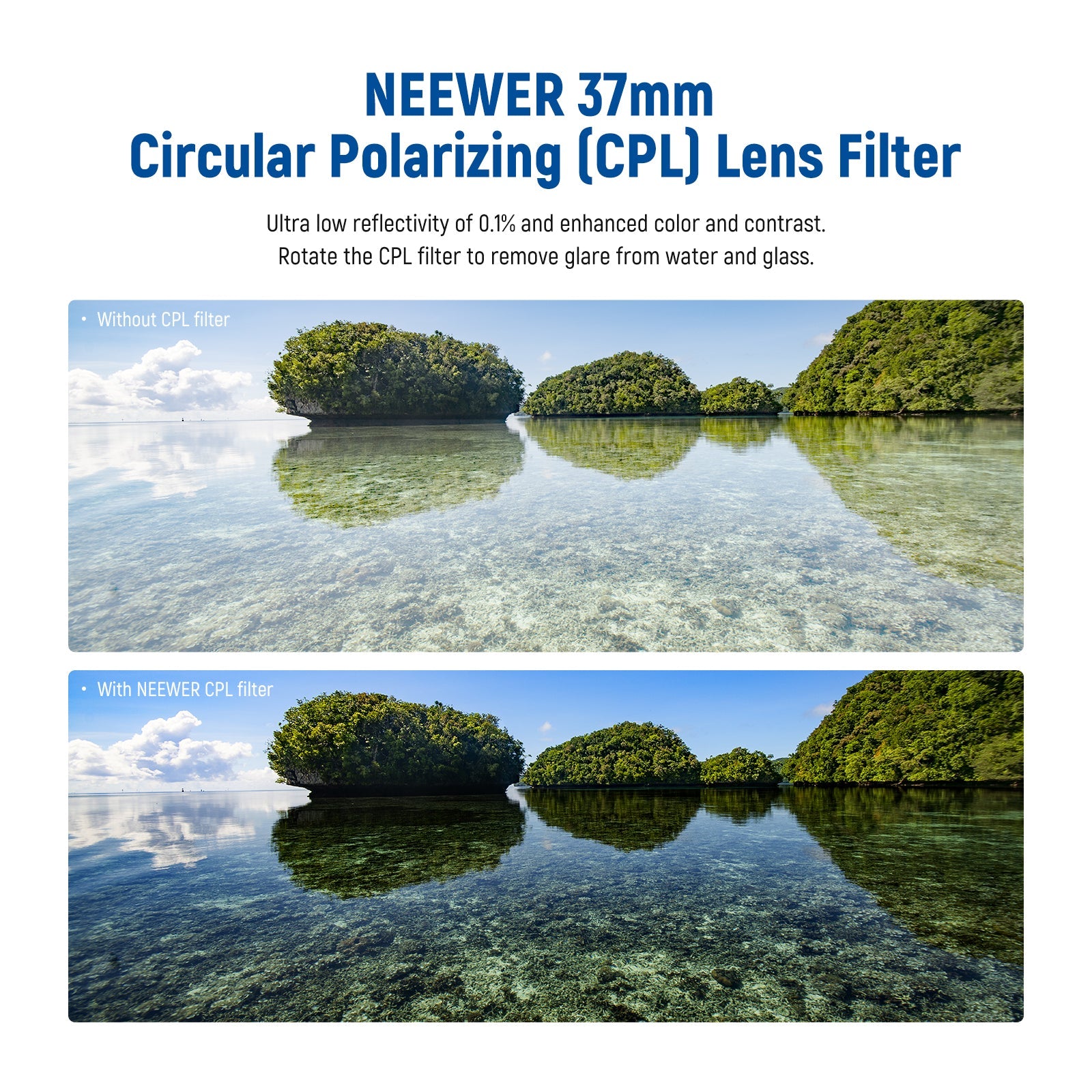
Credit: uk.neewer.com
When Not To Use A Cpl Filter
CPL filters are not for every situation. Here are some times to avoid using one:
- Low light: CPL filters block about 1–2 stops of light, so you may need a slower shutter speed.
- Wider than 24mm lens: At very wide angles, the sky can look uneven, with dark and light patches.
- Rainbows: A CPL filter can actually remove rainbows from your photos, which you might want to keep.
For a quick look at CPL pros and cons:
| Pros | Cons |
|---|---|
| Reduces reflections | Blocks some light |
| Enhances colors | Can cause uneven skies |
Practical Tips For Using Cpl Filters
- Rotate the filter to control the effect. Look through the viewfinder and watch reflections disappear.
- Use manual focus if your camera struggles to focus with the CPL on.
- Clean your filter often—dust can cause strange spots.
One thing beginners miss: the effect is strongest when the sun is at a 90-degree angle to your lens. Facing directly into or away from the sun reduces the filter’s impact.

Credit: magazine.urth.co
Frequently Asked Questions
What Is The Main Use Of A Cpl Filter?
The main use is to reduce reflections and make colors richer, especially in outdoor and water scenes.
Can I Use A Cpl Filter Indoors?
CPL filters are not very useful indoors unless you are shooting through glass or reflective surfaces.
Does A Cpl Filter Affect Exposure?
Yes, it blocks about 1–2 stops of light, so you may need to adjust your settings.
Can I Stack Cpl Filters With Other Filters?
It’s possible, but stacking can cause vignetting or image softness, especially on wide lenses.
Where Can I Learn More About Cpl Filters?
Check out this detailed guide from Photography Life for more tips and examples.
A CPL lens filter is a powerful tool for the right moments. Use it wisely, and your photos will stand out with richer color and less glare.