There’s no single best camera backpack for day hikes. There’s a best one for a certain kind of hiker. Some people carry one camera and a sandwich. Others carry two lenses, binoculars and a rain jacket. The right pack depends on how much gear you carry, how often you hike, and whether you need the camera out fast or tucked away safe. The candidates here differ on exactly those points, so the comparison focuses on them. The two packs in this roundup that differ most are the Cotton Carrier Hyker 25L, which keeps your camera outside the bag, and the Peak Design Outdoor Backpack 18L, which is the small, simple option.


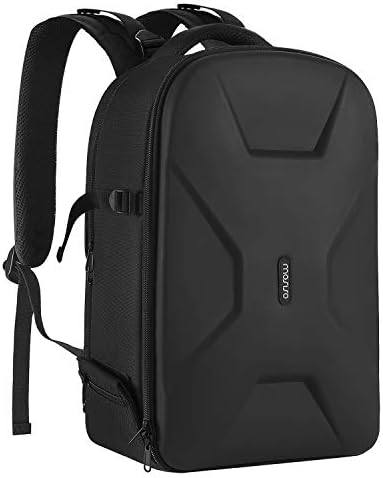


Table of Contents
Pick a Day Hike Camera Backpack by Your Situation
Hiker who wants the camera ready in seconds
Best for: A photographer who stops often to shoot on the trail.
That wastes time and makes you miss the light. A pack that lets you carry the camera outside solves that problem, and it matters most on long days with lots of stops.
The Cotton Carrier Hyker 25L puts the camera on a receiver in the shoulder strap, so it hangs outside the bag. It has a quick-release safety tether. The listing says it works with mirrorless and compact DSLR bodies, so check that your camera is one of them. It also has a 25-liter main compartment with a shelf divider for layers and snacks.
Before you buy, test the carry with your real camera and lens attached.
Good if:
- You shoot a lot while hiking
- You carry a mirrorless or compact DSLR body
- You also want room for layers and a water bladder
Skip it if:
- Your camera is a large DSLR with a big lens, since the listing doesn’t promise that fit
Hiker who wants a light, simple pack
Best for: Someone who hikes most weekends and wants a pack that barely feels there.
A small pack is a good match for a short trail with a single camera, water and a jacket. Weight and fit matter more than capacity here.
The Peak Design Outdoor Backpack 18L is a compact pack in this group. Its listing describes vest-style straps that spread the load, and it has a hydration sleeve that can also hold a laptop up to 16 inches.
Pack it the way you would on a real hike, with water and a jacket inside, and then wear it for a while. Small packs can feel fine in the store and then rub on a long walk, so the fit is worth checking under load.
Good if:
- You carry one camera and light gear
- You want a pack you can also use for commuting
- You like a clean, simple design
Skip it if:
- You need space for a second lens or binoculars, since 18 liters is tight for that
Hiker who carries a lot of gear
Best for: A wildlife or birding photographer on a full-day outing.
Lots of gear means you need room and a way to split it up. A larger pack with removable dividers keeps lenses from banging together.
The Peak Design Outdoor Backpack 25L gives you more room than the 18L, with the same vest straps and the Ultra Cinch roll-top closure. The roll-top lets you shrink the pack as the load changes. It pairs with Peak Design packing cubes and a camera cube sold separately, which you can add if you want to organize the inside.
Think about how you’ll reach your gear. A roll-top means you open the top each time, so put the things you grab most, like a lens cap or snacks, in the spot you can reach without unrolling the whole pack.
Good if:
- You carry more than one lens or extra gear
- You want to use the same pack for travel
- You like a roll-top closure that adjusts to the load
Skip it if:
Hiker who wants to set up the inside
Best for: A photographer who changes what they carry from trip to trip.
Some people want to build the inside to fit their exact kit. A pack with adjustable padded dividers suits them.
The USA Gear Portable Camera Backpack has removable padded dividers and a listed interior size of 11.5 by 10 by 4.5 inches. Because you can add or remove dividers, you can set the layout for one camera on one day and a different kit the next. The listing says it fits under an airline seat, which matters if you fly to a trailhead.
Measure your gear against the interior size before you buy. The divider layout only helps if your lenses and body fit the space you’re dividing.
Good if:
- You change your gear often
- You want padded dividers you can take out or move
- You travel to hikes by plane
Skip it if:
Hiker who wants the most protection for the camera
Best for: A photographer who worries about bumps, drops and wet trails.
A hard shell and thick padding protect the gear better than soft fabric. That helps when the trail is rough or the weather turns.
The MOSISO Camera Backpack has a waterproof PU leather hardshell in front and a foam-padded layer for shock. It has a tripod holder and a laptop compartment for up to 16 inches. It lists compatibility with a range of Nikon and Canon bodies and some DJI drones.
The hardshell sits on the front of the MOSISO pack. Keep your lens facing the padded side when you pack it.
Good if:
- You want a rigid front for extra protection
- You carry a tripod
- You want a laptop slot as well
Skip it if:
- You need a light pack for long climbs, since a hardshell adds weight the listing doesn’t quantify
Hiker who wants a small, structured pack
Best for: A beginner who wants a small pack with a firm shape.
A structured pack holds its shape and keeps gear in place. That helps a beginner who doesn’t yet know what they need.
The TARION Small Camera Backpack 12L has seven adjustable dividers and a bottom tripod holder. The bottom holder keeps the tripod’s weight low and centered, which the listing says improves balance on the trail compared with side mesh pockets. The listing describes a five-layer build with hardshell and foam, and a rain cover. It lists a total weight of 1.8 pounds.
A beginner can start with the dividers in the default layout and move them once they know how their gear fits. That way the pack is set up for the kit they actually carry, not the kit they guessed at.
Good if:
- You want a firm shape and padding
- You carry a tripod at the bottom
- You want a rain cover included
Skip it if:
- You need room for a lot of gear, since 12 liters is small
Hiker who only needs a sling
Best for: A casual photographer who carries a camera and a phone.
A sling bag keeps the weight on one shoulder and lets you swing it around to the front. It’s quick to grab when you only need to pull out your camera and put it back.
The BAIGIO Camera Sling Bag has adjustable padded dividers and can be worn as a sling, shoulder bag or backpack. It’s water-resistant and has compartments for a phone and small items. The dividers can also come out, so the bag can hold everyday items instead of camera gear.
Wear it on the side you shoot from and try swinging it to the front before a hike. The swing is quick only if the strap length suits your body, so adjust it before you set out.
Good if:
- You carry a camera and a few small items
- You want to switch between sling and backpack carry
- You want quick access from the side
Skip it if:
- You hike long distances, since one-shoulder carry can get tiring with extra weight
Where These Overlap
The Peak Design 18L and 25L are close relatives. They share the same fabric, vest straps and modular design, so the choice comes down to how much you carry. If your load fits in 18 liters, the smaller pack is simpler and sits closer to your back. If you add a second lens, a rain jacket or a bottle of water, the 25 liter gives you room without changing how the pack feels on the trail.
Start by listing what you carry on a normal day, then check it against the capacity. A pack that’s much too big tempts you to fill it, and the extra weight wears on your shoulders over a long hike.
The MOSISO and TARION are closer than they look. Both use hard or structured protection and padded dividers, and both have a tripod holder. The MOSISO has a larger laptop compartment and a bigger overall footprint, while the TARION is smaller and lighter. Pick by how much gear you carry and whether you need the laptop slot. If you’ll never use the laptop compartment, the TARION’s lower weight is the more useful trade.
The USA Gear and BAIGIO are different in use. The USA Gear is a box-style backpack that opens wide, so you can see and reach everything at once, but it sits square on your back and is better for shorter walks. The BAIGIO is a sling that rides on one side, so it’s quick to swing around for a shot and stays out of the way when you stop. They do different jobs, so the choice is mostly about carry style: a backpack for the whole day, a sling for quick access on a walk where you stop often.
The Cotton Carrier Hyker 25L stands apart because of its external camera mount. The Twist & Lock receiver in the shoulder strap keeps the camera outside the bag, ready to lift without opening anything. No other listing here describes that feature, so if you need your camera out fast on every stop, this is the one to look at. Weigh that against the fact that a camera hanging on the strap is exposed to rain and bumps in a way it wouldn’t be inside a padded bag.
Still Not Sure?
How often will I actually hike with this?
If you hike most weekends, the pack you carry for hours matters more than any single feature. Comfort over a full day decides whether you keep using it, so weigh how the pack will feel after several hours on the trail, not just how it looks on the shelf. A light pack is the better choice for frequent, long hikes. The Peak Design Outdoor Backpack 18L and 25L are both listed at a light, frameless build with vest-style straps that take the load off your shoulders. The 25L is the larger of the two, so it suits a regular hiker who also wants room for layers and extra gear.
If you hike only now and then, the balance shifts. A pack with stronger protection for the camera may matter more than saving weight on the trail. The MOSISO Camera Backpack is built with a waterproof PU leather hardshell in front and foam padding that cushions the inside against shock and drops. That protection comes with a bag that’s heavier and more structured than the frameless Peak Design packs. Which trade-off you prefer depends on how often you need the protection and how often you need the lightness.
Also consider the seasons you hike in. A pack with a full rain cover, like the Cotton Carrier Hyker 25L, handles sudden weather without a separate cover. The Peak Design packs are described as weatherproof, with abrasion-resistant Terra Shell fabric, so they suit wet conditions too. Check whether the rain protection you need is built in or would have to be bought separately, since that changes how much you carry in total.
What do I already own that this has to work with?
Your existing gear decides a lot. If you already have a Cotton Carrier camera harness or other Cotton Carrier gear, the Cotton Carrier Hyker 25L is designed to work with it. It has a Twist & Lock camera receiver on the shoulder strap and a landing pad on the waist band for a side holster or lens bag, so the two can be worn together. The Hyker is also listed as compatible with the Cotton Carrier Binocular Bracket if you carry binoculars as well.
If you own Peak Design packing cubes, the Peak Design packs pair with them. Both the 18L and 25L are described as working with the Smedium Camera Cube and the Ultralight Packing Cubes, so you can change your setup without repacking everything each time. Make sure the cubes you own are the ones named in the listing before you rely on that.
If you own a tripod, check the holder before you buy. The TARION Small Camera Backpack has a dedicated bottom tripod holder with dual adjustable straps and clips, and the MOSISO has a tripod and monopod holder on one side. Neither Peak Design pack is described with a tripod holder in its listing. Measure your tripod and your lenses against the listed interior dimensions as well.
What am I most likely to regret choosing?
Most people regret buying a pack that’s too small or too heavy for what they actually carry. A pack that looks roomy on a product page can feel cramped once you add a camera body, a lens, water, and a layer, and a pack that’s comfortable empty can feel heavy after an hour loaded. Think about the gear you carry on a typical hike, add water and a layer, and then pick the pack that holds all of it with a little room to spare.
If you’re unsure how much you’ll carry, the Peak Design Outdoor Backpack 25L is the safer choice. It’s larger than the 18L, and it still counts as a light, frameless daypack, so you’re less likely to outgrow it. The 25L also works as a commuter or travel pack, which means it stays useful if your hiking plans change.
Closing
The two packs that split most buyers are the Cotton Carrier Hyker 25L and the Peak Design Outdoor Backpack 18L. Both are built for hiking with a camera, but they solve different problems, and the difference shows up on the trail more than on a spec sheet.
Its patented Twist & Lock receiver sits in the shoulder strap, so a mirrorless or compact DSLR rides outside the bag and can be lifted into position without opening the pack. That matters on a birding walk, where the bird may appear and disappear in seconds. The listing includes a quick-release safety tether for the camera.
The Peak Design 18L takes the opposite approach. It has no camera receiver. It’s a frameless daypack that stays light and simple, and it’s designed to double as a commuter bag. Its hydration sleeve turns into a laptop pocket, and the 270-degree rear zip gives you access to the main compartment without digging from the top. If your camera usually lives inside the pack and comes out only at a stop, the extra features of the Cotton Carrier will go unused, and the Peak Design will feel less cluttered.
Look at the size before you decide. The Cotton Carrier main compartment measures 10.5 by 7 by 20.5 inches and the pack weighs 3 pounds, and the listing says it holds layers, snacks and a raincoat. The Peak Design 18L is smaller by its name, so if you pack a tripod, a long lens and a full layer kit, check whether those items fit inside it before you buy.
Choose the Cotton Carrier if you shoot birds or wildlife and need the camera ready in one movement. Choose the Peak Design 18L if you want a light, simple pack that also works off the trail. If you can’t decide between them, the question is simple: do you need the camera in your hand before you stop walking? If yes, the Cotton Carrier. If no, the Peak Design.
Frequently Asked Questions
Can a camera backpack for day hikes carry a large DSLR with a big lens?
Some can, but the listings differ. The MOSISO lists compatibility with several Nikon and Canon DSLR bodies. The USA Gear and TARION list interior sizes that suit mid-size DSLRs. The Cotton Carrier lists mirrorless and compact DSLR bodies on its external receiver. Check the interior size against your lens length before you buy, because the listings don’t promise a fit for every large lens.
Do I need a hydration bladder in a day hiking camera pack?
Only if you drink a lot on the trail. The Peak Design 18L and 25L have a hydration sleeve, and the Cotton Carrier has a water bladder pocket with a mouthpiece pass-through. The bladder isn’t included with the Cotton Carrier, so you must buy it separately. If you prefer water bottles, look for side pockets instead.
How do I keep my camera dry on a hike?
Look for a built-in rain cover or a water-resistant shell. The Cotton Carrier has a built-in rain cover, and the TARION includes one. The MOSISO has a waterproof PU leather hardshell in front. The Peak Design uses weatherproof Terra Shell fabric. For heavy rain, pair any pack with a dry bag around the camera.
What should I look for in a day hiking camera backpack for birding?
Look for quick access to the camera and room for binoculars. The Cotton Carrier lists a binocular bracket accessory, which lets you carry binoculars and a camera together. The Peak Design 25L gives you the room. Check the strap design too, since a long day of birding means a lot of time with the pack on.