A tripod sprinkler is a smart tool for watering large lawns or gardens. Its adjustable height and spray pattern help cover more area, making it popular for both home and commercial use. But many people struggle to set it up correctly. A poorly adjusted sprinkler can waste water and leave dry patches. Here’s how to get your tripod sprinkler working efficiently, with practical tips for beginners and a few expert insights most people miss.
Table of Contents
Setting Up Your Tripod Sprinkler
Start by placing the tripod base on a flat surface. The legs should be fully extended for stability. If your ground is uneven, adjust each leg until the sprinkler stands firmly. Don’t ignore this step—an unstable base causes tipping and uneven watering.
Next, attach your garden hose tightly to the sprinkler’s inlet. Check for leaks. Even small leaks reduce pressure and coverage.
Adjusting Height And Angle
The sprinkler head height controls how far the water sprays. Most tripods adjust from 20 to 48 inches. Taller settings cover wider areas but can be unstable if not anchored well.
| Height | Coverage Area | Stability |
|---|---|---|
| 20-28 inches | Small to medium lawns | Very stable |
| 29-36 inches | Medium to large lawns | Stable |
| 37-48 inches | Large lawns | Moderate stability |
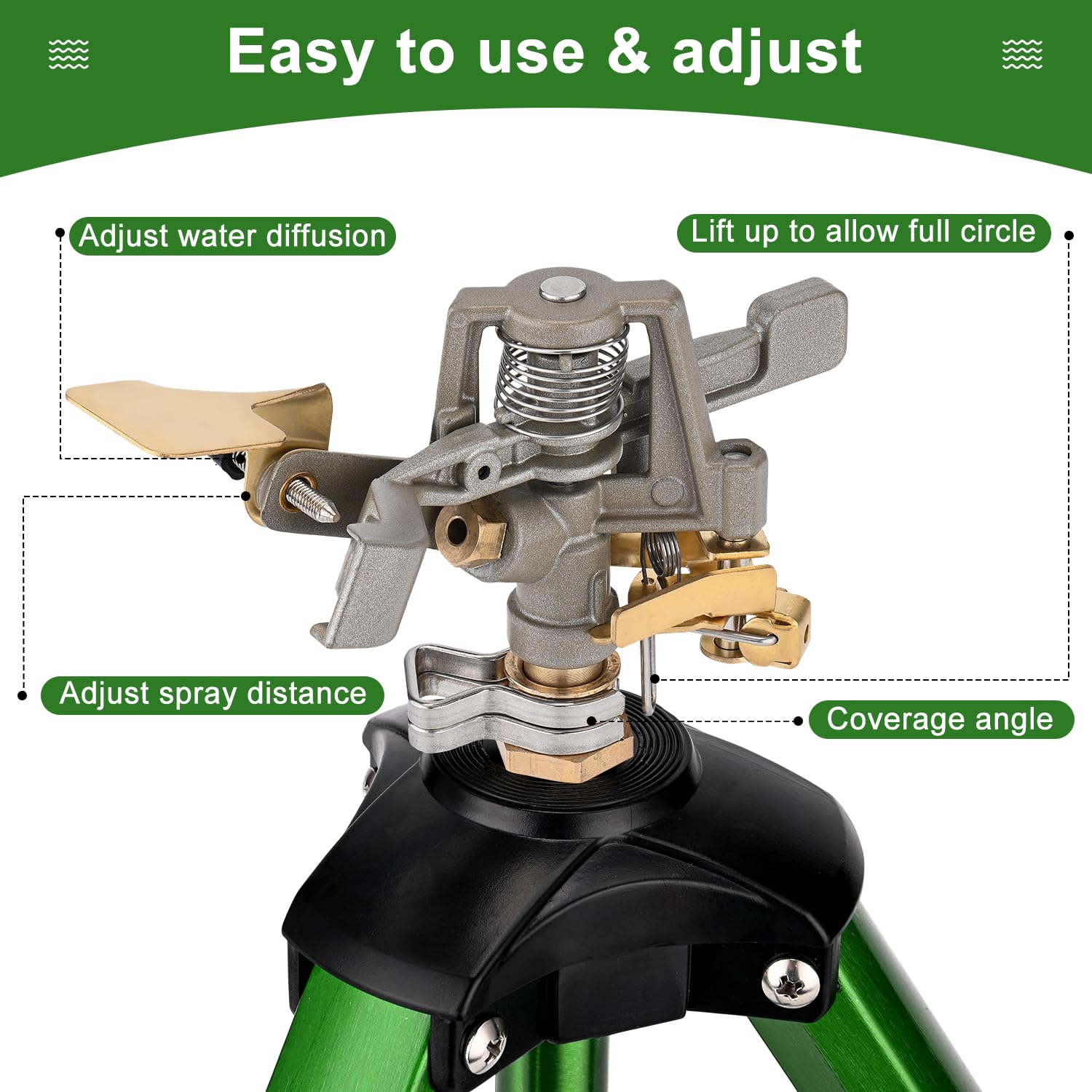
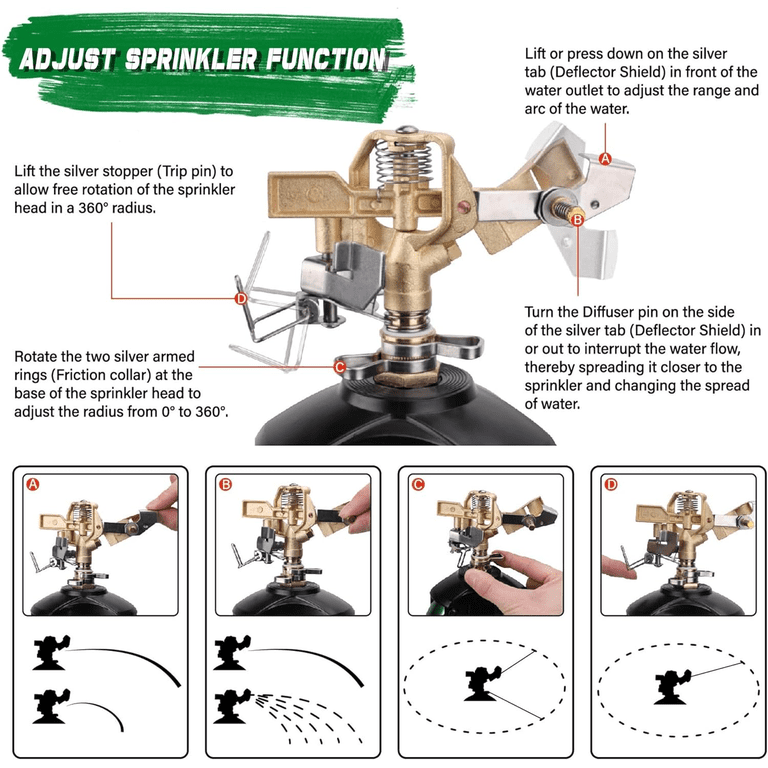
Adjust the angle by tilting the sprinkler head. If you want to avoid spraying on sidewalks or walls, direct the head away from them. Most heads rotate 360°, but limit rotation if your yard has boundaries.
Credit: www.amazon.sg
Modifying Spray Pattern And Distance
Tripod sprinklers often let you control spray pattern (full circle, half, or quarter). Use the pattern selector or adjustment ring for this. For example, a half-circle pattern is ideal for watering along fences.
You can also adjust spray distance. Look for a screw or knob near the nozzle:
- Turn clockwise for shorter spray.
- Turn counterclockwise for longer spray.
Many beginners forget to check water pressure. Low pressure limits coverage. If your sprinkler isn’t reaching far enough, try boosting pressure or cleaning the nozzle.
| Water Pressure (PSI) | Spray Distance |
|---|---|
| 30 PSI | 20 feet |
| 50 PSI | 35 feet |
| 70 PSI | 45 feet |
Common Mistakes And Expert Tips
- Don’t set the tripod too high in windy conditions—wind distorts spray and causes water loss.
- Clean the nozzle regularly; mineral deposits block water flow.
- Check your lawn’s shape and adjust the pattern to avoid overwatering corners.
For more details on sprinkler mechanics, see WikiHow.
A well-adjusted tripod sprinkler saves water and keeps your lawn healthy. It’s worth spending a few minutes to fine-tune height, angle, and spray settings for the best results.
Credit: www.walmart.com
Frequently Asked Questions
How Do I Prevent My Tripod Sprinkler From Tipping Over?
Extend the legs fully and place the sprinkler on a flat surface. For tall setups, anchor the legs with stakes.
What Is The Best Height For Watering A Large Lawn?
Set the height between 36 and 48 inches for maximum coverage, but check stability.
Why Isn’t My Sprinkler Covering The Whole Yard?
Check water pressure, clear nozzle blockages, and adjust the spray pattern.
Can I Use A Tripod Sprinkler With Low Water Pressure?
Yes, but the coverage area will be smaller. Clean the nozzle and avoid tall heights.
How Often Should I Clean My Tripod Sprinkler?
Clean the nozzle and head every 2-4 weeks to prevent mineral buildup and maintain performance.