There’s no single best DJI camera for travel. There’s a best one for a certain kind of traveler. Some people want a pocket camera they can grab and go. Others want something tough enough for rain, cold or a bike ride. Some already own a phone and only need a steady mount. Three things tend to decide it for most buyers: how much they care about image quality, how rough their trips get, and whether they need to hold the camera or mount it. These picks differ on exactly those points. The two that split most buyers are the DJI Osmo Pocket 3 and the DJI Osmo Action 4 Essential. One is built for smooth, handheld walking footage. The other is built to take a beating.
All 5 products side by side — scroll sideways to see every column.
| Top Pick | Runner-Up | Also Great | Best for Tabletop Filming | Best for Adjustable Angles | |
| Preview |  | 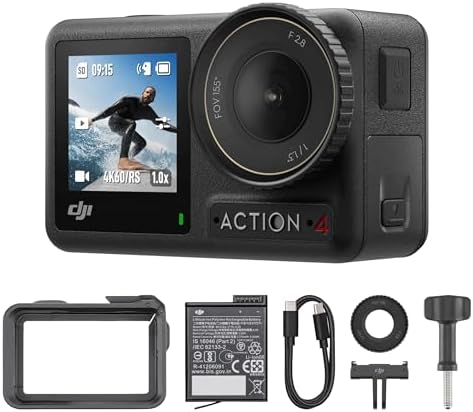 | 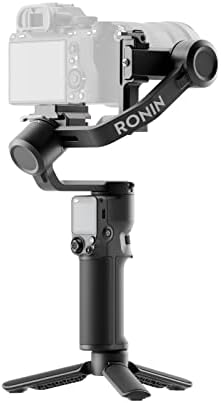 |  |  |
|---|---|---|---|---|---|
| Product | DJI Osmo Pocket 3 | DJI Osmo Action 4 Essential | DJI RS 3 Mini | CAMBOFOTO Mini Tripod | ULANZI MT-16 Tripod |
| Brand | DJI | DJI | DJI | CAMBOFOTO | ULANZI Select |
| Best for | Best Overall | Runner-Up | Also Great | Best for Tabletop Filming | Best for Adjustable Angles |
| The listing says | 1-inch CMOS sensor with 4K at 120fps 2-inch touch screen that rotates for vertical shots | 1/1.3-inch sensor with 2.4μm pixels for low light 10-bit color with D-Log M for editing flexibility | Weighs 795g (1.75 lbs), ultra-compact gimbal Load capacity up to 2 kg (4.4 lbs) | Screw-on mount, no plate or adapter needed Folds from tabletop tripod to handgrip | Upgraded from MT-08 with extra height level Works as handle grip or selfie stick |
| More information | Check Price on Amazon | Check Price on Amazon | Check Price on Amazon | Check Price on Amazon | Check Price on Amazon |
Table of Contents
1. DJI Osmo Pocket 3 Vlogging Camera with 1” CMOS &
Best for: A traveler who wants to film while walking and talking.
A walking traveler gets jostled all day. The Pocket 3 uses 3-axis mechanical stabilization to keep handheld footage smooth. Its listing says this holds up while you move, dance or hike, so you don’t need a separate gimbal for most walking shots.
Stabilization matters most when your footage is shot on the move, since each step can make a handheld clip bounce. A camera that smooths that motion lets you keep walking and talking instead of stopping every few seconds to re-frame.
The rotating 2-inch touchscreen lets you frame horizontal or vertical shots without fumbling. Flipping the screen between orientations is useful when you shoot for a phone-first feed one minute and a wider screen the next, and you can check your framing while you keep moving.
The listing also mentions ActiveTrack 6.0 for keeping you in frame, and stereo recording for sound. For a solo vlogger, ActiveTrack is the feature that matters: set the camera on a tripod and you can walk, turn or jump while staying center-frame. Stereo recording helps when you talk to the lens in a noisy street, though a separate microphone is the better choice for quiet interviews.
Good if:
- You film yourself while walking through a new city.
- You want one small camera that handles both photos and video.
- You plan to edit footage later and want 10-bit color with D-Log M.
Skip it if:
- You need to shoot underwater or in heavy rain.
- You mostly film from a fixed spot and never move with the camera.
2. DJI Osmo Action 4 Essential Combo
Best for: A traveler who will mount the camera on a bike, a board or in the water.
Action travel means cold air, wet gear and bumps. The Action 4 is listed as waterproof to 18 m, and its battery is rated to work down to -20°C (-4°F). Those are the facts that matter if you ski, surf or ride.
The listing rates the Action 4 as waterproof to 18 m. The battery is listed to work in temperatures as low as -20°C (-4°F).
The magnetic quick-release mount lets you switch angles and go vertical in seconds. Dual touchscreens, front and rear, let you frame a shot without taking the camera off the mount.
The 10-bit color and D-Log M profile give you more room to fix exposure and color later in editing. If you plan to grade footage, shoot in that mode and expect flatter-looking clips straight out of the camera.
The camera is a good fit for mounts that take a lot of vibration, such as a handlebar or a board rail. Use the stabilization modes for those shots, since they smooth out the bumps you would otherwise see on the playback.
Good if:
- You plan to film from a bike, a motorcycle or a boat.
- You want a camera that handles cold weather and water.
- You need the front screen to check yourself while you ride or swim.
Skip it if:
- You want the smoothest possible walking shots with no bounce.
- You prefer to carry a camera in a pocket all day.
3. DJI RS 3 Mini
Best for: A traveler who already has a mirrorless or DSLR camera and wants smooth motion.
If you carry a bigger camera, the RS 3 Mini is a gimbal that holds it steady. The listing gives it a 2 kg (4.4 lbs) payload and says it works with Canon, Sony, Nikon and Fujifilm bodies. Weighing 795g, it’s light enough to carry all day.
Native vertical shooting means you can rotate it for social media clips without a separate bracket. Bluetooth shutter control lets you start and stop recording without touching the camera, which helps with group shots.
Note that the listing says Ronin series gimbals need the DJI Ronin app for full function, and that the app has been pulled from Google Play. Check that you can get the current version from DJI’s site before you leave home.
Good if:
- You already own a larger camera and want it to look smooth on the move.
- You shoot vertical video for social media.
- You want to trigger the shutter from the gimbal.
Skip it if:
- You only have a phone or a pocket camera.
- You don’t want to set up an app before a trip.
4. CAMBOFOTO Mini Tripod Stand
Best for: A traveler who films at a table, a cafe or a campsite.
This is a small accessory, not a camera. It’s made for DJI Osmo Pocket 3, Pocket 4 and Pocket 4P, and the listing says the 1/4-inch screw fits many other action cameras and lights too. It folds to a handgrip for walking shots and opens to a desktop stand in one tap.
The main reason to choose it’s speed. You don’t need a plate or an adapter for the Pocket series. You screw the camera on and start shooting, which matters when a scene is about to change and you have only a few seconds to set up.
The listing gives it an anti-slip silicone base and a hinge that holds its angle. Those two features do different jobs.
It’s listed at 2.1 ounces with a 3.3 lb load limit. That’s enough for a pocket camera, but don’t expect it to hold anything heavier.
The folded legs also make it easy to carry. They collapse to a slim body that fits in a pocket, a backpack or a camera bag, so it adds little bulk to a day of travel.
Good if:
- You want a simple way to switch between handheld and tabletop shots.
- You shoot time-lapses or low-angle clips on a flat surface.
- You want one small stand that works across several compact cameras and lights you already own.
Skip it if:
- You need to mount a larger camera or a heavy light.
- You plan to shoot on uneven ground, where a tabletop stand has little to grip.
5. ULANZI MT-16 Extendable Mini Camera Tripod
Best for: A traveler who wants a tripod that adjusts in height and angle.
The MT-16 extends to four height levels and has a 360° ball head. The listing says it works as a handle, a selfie stick or a desktop tripod. It weighs 170g and is 22.5 cm long, so it fits in a jacket pocket, a backpack or any storage bag.
That range matters when you shoot on the move. The MT-16 extends to four height levels, so you can adjust its height as the scene requires. Being able to raise the legs or pull the unit out as a selfie stick means the same small piece of kit works for a sunrise on a trail, a café table and a crowded market.
A cold shoe on the ball head lets you add a microphone or video light. That helps if you record voice notes on the road. The listing says vertical mode holds up to 500g, which covers most compact cameras but not heavier kits.
The rubberized surface is soft and grips well, so the tripod is less likely to slip when you set it on a rough surface. The 1/4″ screw fits a long list of action cameras and compact cameras, including DJI Osmo Pocket 3 and GoPro Hero models, so you may not need an adapter.
The phone holder isn’t included, and the listing points to another model if you need one for a heavier camera. If you plan to mount a phone, budget for that separately. If your camera is heavier than 500g in vertical mode, look for a tripod with a higher load rating instead.
Good if:
- You want more height adjustment than a fixed mini tripod.
- You plan to add a microphone or small light.
Skip it if:
- You need to hold a heavy camera rig.
Where These Overlap
The Osmo Pocket 3 and the Osmo Action 4 are the two picks most travelers will weigh against each other, and they overlap more than their names suggest. Both shoot 4K at 120fps and both can connect directly to DJI Mic transmitters, as listed. Where they split is in how they’re meant to be held and where they can go. The Pocket 3 is built around a 2-inch rotating touchscreen, 3-axis mechanical stabilization and ActiveTrack, so it suits handheld walking, talking to the camera and following yourself through a crowd. The Action 4 is built to be mounted, with a magnetic quick-release, a 155° field of view and waterproofing down to 18 meters, so it suits bikes, helmets, boats and anything that gets wet or knocked around.
The practical test is this: picture the first hour of your trip. If most of that footage is you talking, walking or moving through people, the Pocket 3 will feel natural. If most of it’s you strapped to something, in water, or in cold conditions, the Action 4 is the one that will survive the day and keep its battery going. The Action 4’s 1770mAh battery is listed to last up to 150 minutes and to work in temperatures as low as -20°C (-4°F).
The CAMBOFOTO and ULANZI tripods overlap too. Both are small stands for desktop or handheld shooting, and both use a standard 1/4″ screw. The CAMBOFOTO is the simpler of the two. It screws straight onto Pocket-series cameras with no plate or adapter, folds into a handgrip, and holds up to 3.3 lb. The ULANZI adjusts more. It has a 360° ball head, four levels of height, a cold shoe for a microphone or video light, and it can be used for vertical shooting. If you only need a tabletop stand for a single camera, the CAMBOFOTO is enough. If you want height control or a microphone mount on the same stand, the ULANZI is the better fit, though its listing notes that its vertical mode carries up to 500g.
Still Not Sure?
How often will you really use it?
If your trips are short and you mostly film on the move, a pocket camera gets used more than a bigger rig. The reason is simple: a camera that stays in your pocket is ready when a moment appears, while a heavier setup often stays in the bag. If you only film a few times a year, a camera you can carry all day matters more than extra features, because the best camera for you is the one you actually bring along. Think honestly about how often you’ll carry it, not how often you hope to. The Osmo Pocket 3 suits frequent walking shots, since its 1-inch sensor, stabilization and pocket-sized body are built for filming while you move.
What do you already own?
If you already have a phone or a mirrorless camera, you may not need a whole new camera. Start by listing what you have and what you still lack, such as stability, audio or a way to frame vertical shots. A stabilizer like the RS 3 Mini can make your existing camera look smoother. It’s rated for a load of up to 2 kg (4.4 lbs), so it can carry many camera and lens combinations, but that’s only useful if your body falls within that range. The listing names Canon, Sony, Nikon and Fujifilm, so check that your body is among those brands.
What are you most likely to regret?
Most people regret choosing a camera that can’t handle their trips. Ask yourself where you’ll be filming and what conditions you’ll face. If you ride, swim or shoot in cold weather, the Osmo Action 4 is the one whose listed waterproofing and cold-temperature battery rating fit those conditions. Its battery is also rated for very cold conditions, which matters when a pocket camera would struggle. If you mostly walk and talk, you may regret buying something bulkier than you need, and the Osmo Pocket 3 fits better. Choose for the trips you actually take, not the ones you imagine.
Closing
Two situations split most buyers. If you film handheld on foot, the DJI Osmo Pocket 3 is built for that. Its 3-axis stabilization keeps footage smooth while you dance, chase pets, or hike, and its rotating 2-inch touchscreen lets you switch between horizontal and vertical framing without guesswork.
If you mount your camera on a bike or take it into water and cold, the DJI Osmo Action 4 Essential is built for that. It’s waterproof to 18 m and works in temperatures as low as -20°C (-4°F), and its magnetic quick-release mount lets you change angles in seconds. That matters most when you’re moving fast and don’t want to stop to adjust gear.
The deciding factor is often how long you’ll be on the move. The Pocket 3 is pocket-sized and easy to carry all day, which suits walking-heavy trips. The Action 4 is built to be attached to something and left there, which suits activity-heavy trips.
Your next step is to write down the three most likely places you’ll film on your next trip. Be specific: a rainy city street, a cold mountain path, a crowded family dinner. For each place, ask whether you’ll be holding the camera, mounting it, or getting it wet or cold. Match those answers to the features above. If most of your places call for holding the camera, the Pocket 3 fits. If most call for mounting it or exposing it to water and cold, the Action 4 Essential fits.
Frequently Asked Questions
Can a DJI pocket camera be used underwater?
The Osmo Pocket 3 listing doesn’t describe underwater use, so don’t plan on it. The Osmo Action 4 is listed as waterproof to 18 m, which makes it the one to choose if water is part of your trip.
Do I need a gimbal with a DJI camera for travel?
Most pocket cameras here have built-in stabilization, so a separate gimbal isn’t required for walking shots. If you carry a larger camera, the DJI RS 3 Mini is listed to hold up to 2 kg, which covers many mirrorless bodies.
Will a mini tripod work with my action camera?
The CAMBOFOTO and ULANZI tripods both use a standard 1/4-inch screw. Their listings say this fits many action cameras, but check the load limit before you mount anything heavy.
Do I need to install an app for the DJI RS 3 Mini?
Yes, the listing says the DJI Ronin app is needed for activation and full function, including wireless firmware updates. The app has been removed from Google Play, so download it from DJI’s official site before your trip.