Buy it if you shoot wildlife, birds or field sports on a Nikon DSLR and you want a long reach without a professional-grade outlay; skip it if you mostly shoot indoors or want to walk all day with a lens on your shoulder. The Nikon AF-S FX NIKKOR 200-500mm Cameras is a super-telephoto zoom, and its listing leads with three things: 500mm of reach, a constant f/5.6 aperture across the whole zoom range, and 4 stops of Vibration Reduction with dedicated Tripod and Sports modes.
The person this lens is built around shoots outdoors in good light, wants one lens that covers a bird on a branch and a player on the far side of a pitch, and is willing to carry something substantial to get that reach. They probably already own a Nikon body, and they may already own a teleconverter. The trade-off is straightforward and it’s the thing to settle before buying: a constant f/5.6 aperture at 500mm means the lens wants daylight, so check what’s in the box if a tripod collar or a case matters to you.
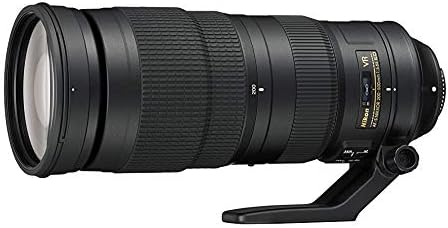
Table of Contents
Who should buy the 200-500mm zoom
The first buyer is the wildlife and bird photographer who works in daylight and needs reach more than speed. The listing gives 500mm on an FX-format body and a 750mm equivalent field of view on a DX-format body, which is the headline for anyone chasing small subjects at distance. If they already shoot a DX body, that equivalent figure is the whole reason to look here — it turns a long zoom into a very long one without buying anything else. They’d use it on weekends and on trips, mounted on a body they already own, and they’d accept that the lens stays on the camera for the whole session rather than being swapped in and out.
The second buyer is the field-sports parent or amateur who shoots from the sideline or the stands. A constant f/5.6 aperture across the zoom range means the exposure doesn’t shift as they zoom from a wide framing of the pitch to a tight one on a single player, and the listing’s Sports mode on the Vibration Reduction system is aimed squarely at that kind of panning work. They shoot in daylight, they shoot handheld, and they want one lens that covers both a group shot and a face.
The third buyer is someone who already owns a Nikon teleconverter. The listing says the lens is AF compatible with optional TC-14E series teleconverters and with DSLRs that offer f/8 support. That’s a specific pairing, and it rewards a buyer who already has that converter and a body that supports the combination — they extend the reach without changing lenses.
Two buyers should skip it. The first is the indoor or evening shooter. A constant f/5.6 aperture is a real limit in low light, and the listing’s own framing puts low-light performance alongside the out-of-focus background benefit rather than claiming the lens is built for dim rooms. Someone shooting concerts, indoor sport or dusk events should look for a long lens with a wider maximum aperture instead, and accept the extra size that comes with it. The second is the traveller who wants a long lens in a small bag. The focal range and the constant aperture describe a long lens, and anyone hiking long distances should think about whether they’ll actually carry it.
What the 200-500mm actually gives you
Reach is the reason this lens exists, and the listing states it plainly: 500mm on FX-format DSLRs and a 750mm equivalent on DX-format DSLRs. That’s the number to hold onto. On a DX body, a subject that filled a small part of the frame with a standard zoom now fills much more of it, which is the difference between a bird you can identify and a bird you can print. The condition attached is the mount: this is an FX lens, so it works across Nikon’s FX and DX DSLR bodies, and the equivalent figure only applies on the DX side.
Getting close to distant subjects
The focal range runs from 200mm to 500mm, which covers more ground than a fixed long lens would. At the short end you can frame a group of animals or a full-length player; at the long end you’re on a single head. That range matters in the field because wildlife and sport don’t hold still at a fixed distance, and a zoom lets you react without moving your feet.
The 750mm equivalent on DX-format bodies is the part that changes buying decisions. If you already own a DX body, you’re effectively getting more reach from the same lens than an FX shooter would, and that’s a legitimate reason to pair this lens with the camera you have rather than upgrading the body. The limit is that the equivalent figure is a field-of-view comparison, not extra magnification in the optical sense — the lens is still a 200-500mm design, and the DX body simply crops the frame it sees.
Autofocus is the other half of this job, and the listing ties it to specific hardware: AF compatibility with optional TC-14E series teleconverters, and with DSLRs that offer f/8 support. That’s a narrow, checkable condition. If your body doesn’t offer f/8 support, the converter pairing the listing describes may not autofocus, so check your camera’s specification before you plan around it.
Keeping the frame steady at 500mm
Long focal lengths magnify every small movement, and the listing addresses that with 4 stops of Vibration Reduction. The figure is the manufacturer’s rating, and what it changes in practice is how slow a shutter speed you can reasonably hand-hold at the long end — which in turn is what lets you keep shooting as the light drops toward the end of the day rather than packing up.
The listing names two specialised modes on that system: Tripod and Sports. Sports mode is the one that matters for panning, because it’s designed for a subject moving across the frame, which is exactly the sideline and airshow case. Tripod mode is for the opposite situation — the lens mounted and still. Having both means you don’t have to switch the stabilisation off when you change your setup, which is a small thing that saves a spoiled frame.
Treat it as headroom you can lean on, not as a replacement for good technique.
Separating a subject from its background
A constant f/5.6 aperture across the zoom range is the listing’s second headline, and it does two jobs. The first is exposure consistency: as you zoom from 200mm to 500mm, the maximum aperture doesn’t change, so your shutter speed and ISO don’t have to change either. That’s one less thing to manage when a subject moves.
The second job is the one the listing names directly — beautiful out-of-focus backgrounds. At 500mm and f/5.6 you’re working with a long focal length and a relatively wide opening, which is the combination that throws a background out of focus and pulls a subject forward. For wildlife and portraits of animals, that separation is often what makes an image look deliberate rather than documentary.
The limit is the same f/5.6 figure. A constant aperture of f/5.6 is a modest maximum, so the lens needs decent light to keep shutter speeds up, and it won’t match a prime with a wider maximum aperture in a dim forest or under floodlights. The listing also mentions low-light performance, and the stabilisation works in your favour as the light drops.
Matching the lens to a body you already own
The listing describes a Nikon F-mount lens for Nikon DSLR cameras, and the format breakdown tells you what to expect. On FX you get the full 200-500mm range; on DX you get the 750mm equivalent framing at the long end.
The teleconverter line is the compatibility detail worth checking twice. The listing names TC-14E series converters specifically, and adds the condition that the DSLR must offer f/8 support. That’s a specific pairing rather than a universal one. If you own a different converter, the listing doesn’t claim it works, so verify before assuming.
That covers the listed features in full; the table below gathers every figure and condition in one place.
| # | What Amazon lists |
|---|---|
| 1 | 500mm of zoom power on FX-format DSLRs; 750mm equivalent on DX-format DSLRS |
| 2 | Fast f/5.6 constant aperture for beautiful out-of-focus backgrounds and low-light performance |
| 3 | 4 stops of Vibration Reduction with specialized Tripod and Sports modes |
| 4 | AF compatible with optional TC-14E series teleconverters and DSLRs that offer f/8 support |
Where the 200-500mm helps and where it doesn’t
Pros
- 500mm on FX, 750mm equivalent on DX bodies
- Constant f/5.6 aperture across the whole zoom range
- 4 stops of Vibration Reduction with Tripod and Sports modes
- AF compatible with TC-14E series teleconverters on f/8 bodies
- A single zoom covers everything from wide framing through to tight crops
Cons
- Constant f/5.6 maximum aperture needs good light
- Teleconverter autofocus depends on a body with f/8 support
The verdict on the Nikon 200-500mm
Buy it if you shoot wildlife, birds or outdoor sport on a Nikon DSLR in daylight and you want 500mm of reach with stabilisation built in; skip it if your subjects live in dim light or you need a long lens that disappears into a small bag. That’s the whole decision, and it rests on the aperture figure rather than on anything you have to guess at.
For the daylight wildlife shooter, this lens answers the question it was designed for. The 500mm reach, and the 750mm equivalent on a DX body, mean you can photograph subjects that a shorter zoom can’t isolate, and the 4 stops of Vibration Reduction with a dedicated Sports mode means you can do it handheld while a subject moves. The constant aperture keeps exposure steady as you zoom, which matters more than it sounds when a bird won’t sit still. If you already own a DX body and a TC-14E converter, and your camera offers f/8 support, the listed compatibility gives you a path to more reach without a second lens.
For the low-light shooter, the honest answer is no. A constant f/5.6 aperture is the trade-off this lens makes, so for indoor sport or evening events look for a long lens with a wider maximum aperture. If that’s your work, look for a long lens with a wider maximum aperture, and accept the extra size and the narrower focal range that come with it.
For the traveller, the question is whether you’ll carry it. Check the box contents before you plan a trip around it. If you’re hiking long distances, a lighter long lens may get used more often than a heavier one that stays home.
The central trade-off, in plain terms: this lens buys reach and steadiness by accepting a modest maximum aperture. If your shooting happens in daylight and your subjects are far away, that’s what it’s built for. If your shooting happens after sunset, it isn’t.
Frequently Asked Questions
What does buying a renewed lens mean for me?
The listing presents this lens as renewed, so the practical questions are who did the work and what coverage comes with it. Ask the seller directly about the condition grade and the return window before you buy.
Do I need a teleconverter to get the most from this lens?
No. The lens reaches 500mm on its own, and on a DX body that’s a 750mm equivalent field of view without any accessory. The listing mentions AF compatibility with optional TC-14E series teleconverters, so a converter is an optional extension rather than a requirement.
Will it autofocus on my Nikon camera?
It depends on the body, and the listing gives you the condition to check. The lens is described as AF compatible with optional TC-14E series teleconverters and with DSLRs that offer f/8 support — that f/8 support is the specific requirement named for that pairing. Without a converter, the lens is built for Nikon DSLR cameras. Check your camera’s specification for f/8 autofocus support if you plan to add a converter.
What’s in the box, and what do I need to buy separately?
The listing describes the lens itself and its optical and stabilisation features, and it doesn’t state what else ships alongside it. Since this is a renewed unit, the safest approach is to ask the seller for a full contents list before ordering, and to confirm whether any original accessories are included. If you need a specific item, get it in writing first.
Is a long zoom like this worth owning at all?
For daylight work at distance, yes — reach is the one thing you can’t fake in post, and 500mm with stabilisation covers a lot of ground. The lens earns its place if your subjects are far away and the light is decent; it earns nothing if you shoot indoors or at dusk.